

Most Websites Are Missing This
Find out how your website handles privacy, tracking, and user data and what to fix
- See what your website is collecting
- Identify gaps in privacy and tracking
- Get a simple plan to improve
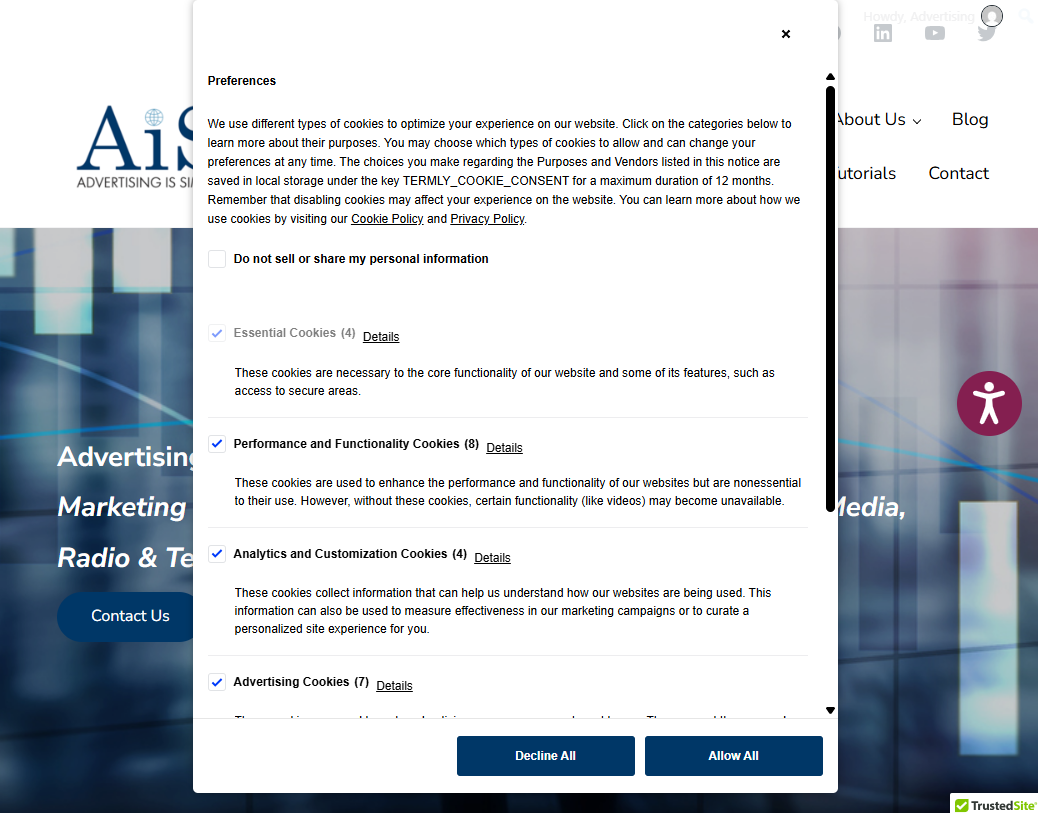
Watch this quick video to see what most websites are missing and why it matters

What’s Your Website Privacy Score?
Most websites we review fall between a 3 and 5 out of 10
We’ll show you:
- What’s in place
- What’s missing
- What to improve
Here’s Where Most Websites Fall Short
Problems:
❌ No cookie control
❌ Unclear data collection
❌ Missing disclosures
❌ Policies hard to find
Impact:
👉 Confuses visitors
👉 Reduces trust
👉 Creates risk
👉 Weakens your marketing foundation
Here’s a Simple Way to Fix It
We help clean up your website’s privacy structure and tracking setup so everything is clear, transparent, and aligned
Privacy Foundation Setup
- Privacy Policy + Terms
- Footer links
- Form disclosures
- Do Not Sell page
👉 Result:
Clean, professional privacy structure
Privacy + Cookie Control System
- Cookie banner
- Tracking audit
- GA4 updates
- Policy alignment
👉 Result:
Full transparency and user control
Simple Process
4 STEPS:
- Review your website
- Identify gaps
- Implement updates
- Keep everything up to date
Ready to See Your Score?
We’ll review your site and show you exactly what to improve
We work with businesses across the Mid-Atlantic to improve their marketing, websites, and online visibility
This service is designed to fit directly into your existing website and marketing efforts
Advertising Is Simple does not provide legal advice. We recommend consulting an attorney to ensure compliance based on your business.
FAQs
1. Why does my website need privacy and cookie policies?
Most websites collect visitor information through forms, analytics, advertising, or cookies. Clear policies help visitors understand what information is collected and how it may be used.
2. What are the benefits of a cookie consent banner?
A cookie banner gives visitors more control over website tracking by allowing them to accept or reject certain types of cookies. It also makes your data collection practices more transparent.
3. Does this make my website legally compliant?
No service can automatically guarantee legal compliance. Privacy laws vary by business, location, and how data is collected. AIS handles the website implementation, but we recommend consulting with an attorney about your specific legal requirements.
4. Why should visitors be able to accept or reject tracking?
Giving visitors a choice provides greater control over their information and helps your website follow modern privacy and transparency practices.
5. Does website privacy matter for small businesses?
Yes. Even small business websites commonly collect information through contact forms, Google Analytics, advertising pixels, email signups, and other tools.
6. Why should my privacy policy match my website tracking?
Your policies should accurately reflect what your website is doing. If you’re using analytics, advertising pixels, forms, or other tracking tools, your privacy disclosures should account for them.
7. Why do privacy and cookie policies need ongoing updates?
Websites, tracking technologies, and privacy requirements change over time. Regular reviews help keep your policies and cookie settings aligned with your current website setup.
8. What does Advertising Is Simple handle?
AIS handles the website side—from privacy-related pages and links to cookie controls, tracking identification, and other privacy-related website updates, depending on the package you select.